
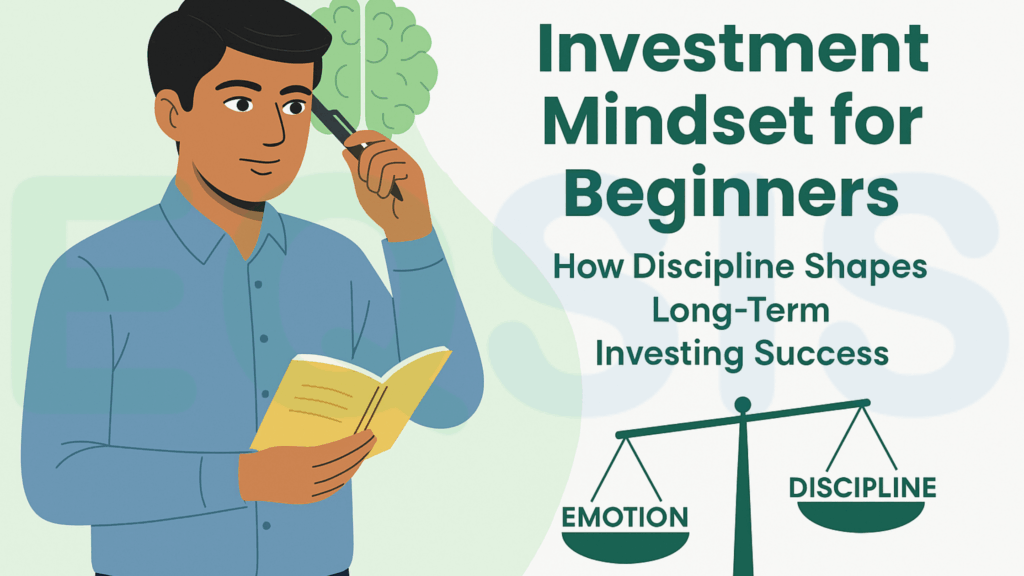
Have you ever felt a knot in your stomach when markets fall? Or a sudden rush of excitement when you hear about a “hot stock” that’s supposedly making everyone rich?
If yes, you’re not alone.
Most people assume that successful investing comes from predicting markets or finding secret information. But in reality, the biggest factor influencing your long-term returns isn’t the market — it’s your own mind.
Your financial future depends far more on your discipline than on your ability to forecast the next trend. It’s not about suppressing emotions, but understanding how fear and greed influence your behaviour — and making sure they don’t control your decisions.
The Two Emotional Forces That Hurt Investors
In investing, emotions are powerful. If left unchecked, they can quietly destroy years of hard work.
1. Fear – The Urge to Sell When Markets Fall
When markets drop sharply and news headlines scream negativity, fear takes over.
This often leads to:
-
Panic selling
-
Locking in losses
-
Exiting at the worst possible time
Losses feel twice as painful as gains feel rewarding — that’s why fear pushes investors into impulsive decisions.
2. Greed – The Urge to Chase What’s Rising
When markets rally, greed appears in the form of FOMO — Fear of Missing Out.
Suddenly:
-
Everyone is talking about stocks that “can’t lose”
-
Investors start buying at the peak
-
People jump into trends without research
Greed convinces investors that they must act immediately, even if it goes against logic or strategy.
These emotional reactions may feel natural, but they are dangerous for long-term wealth creation.

The Pillars of Investment Discipline
The only way to overcome fear and greed is with a clear, structured foundation.
Discipline is not a personality trait — it’s a system you build.
Define Your Strategy and Your Goals (and Write Them Down)
Before investing a single rupee, you need a written Investment Policy Statement (IPS).
Your IPS should include:
-
Long-term goals
-
Investment horizon
-
Realistic risk tolerance
-
Preferred asset allocation (example: 70% equity, 30% debt)
When markets move wildly, your IPS becomes your anchor — helping you stay focused instead of reacting emotionally.
Embrace Systematic Investment Plans (SIPs)
SIP is one of the simplest ways to build discipline.
-
You invest a fixed amount every month
-
You buy fewer units when markets rise
-
You buy more units when markets fall
This removes the stress of market timing and builds wealth steadily.
SIPs are especially powerful for beginners learning stock market basics, mutual funds, and long-term portfolio planning.
Rebalance Your Portfolio Regularly
Over time, your asset allocation drifts.
Example:
If stocks grow faster than bonds, your 70–30 allocation may become 80–20.
Rebalancing means:
-
Selling a part of your winners
-
Buying more of the underperformers
-
Returning to your original allocation
This keeps your risk level stable and forces you to sell high and buy low — the core of long-term investing success.
Practical Mindset Tools to Strengthen Discipline
Discipline becomes easier when supported by the right mental habits.
Zoom Out When Markets Get Noisy
Daily market moves are just noise.
Instead, focus on long-term market behaviour. Historically, equity markets have always risen over time despite:
-
Recessions
-
Crashes
-
Volatility
-
Political events
As Warren Buffett wisely said,
“The stock market is a device for transferring money from the impatient to the patient.”
Limit Financial Media Consumption
News channels and social media thrive on sensationalism.
Their job isn’t to educate — it’s to grab attention.
Too much exposure leads to:
-
Overreacting
-
FOMO
-
Fear
-
Anxiety
-
Unnecessary portfolio changes
Check your portfolio periodically, not emotionally.
The Alignment Test
Before making any sudden decision, ask yourself:
“Does this action align with my written investment plan and long-term goals?”
If your answer is “No,”
it’s not a decision — it’s an impulse.
Walk away.
The Real Secret to Wealth: Outsmart Yourself, Not the Market
Long-term wealth isn’t built by beating the market.
It’s built by beating your own impulses.
When you:
-
Define your strategy
-
Automate your investments
-
Rebalance regularly
-
Control fear and greed
-
Stay patient through volatility
…you give yourself the best chance to capture the long-term growth opportunities the market consistently provides.
Your discipline — not your predictions — becomes your biggest asset.
Take the time today to formalize your investment plan.
Your future self will thank you for the discipline you build today.